
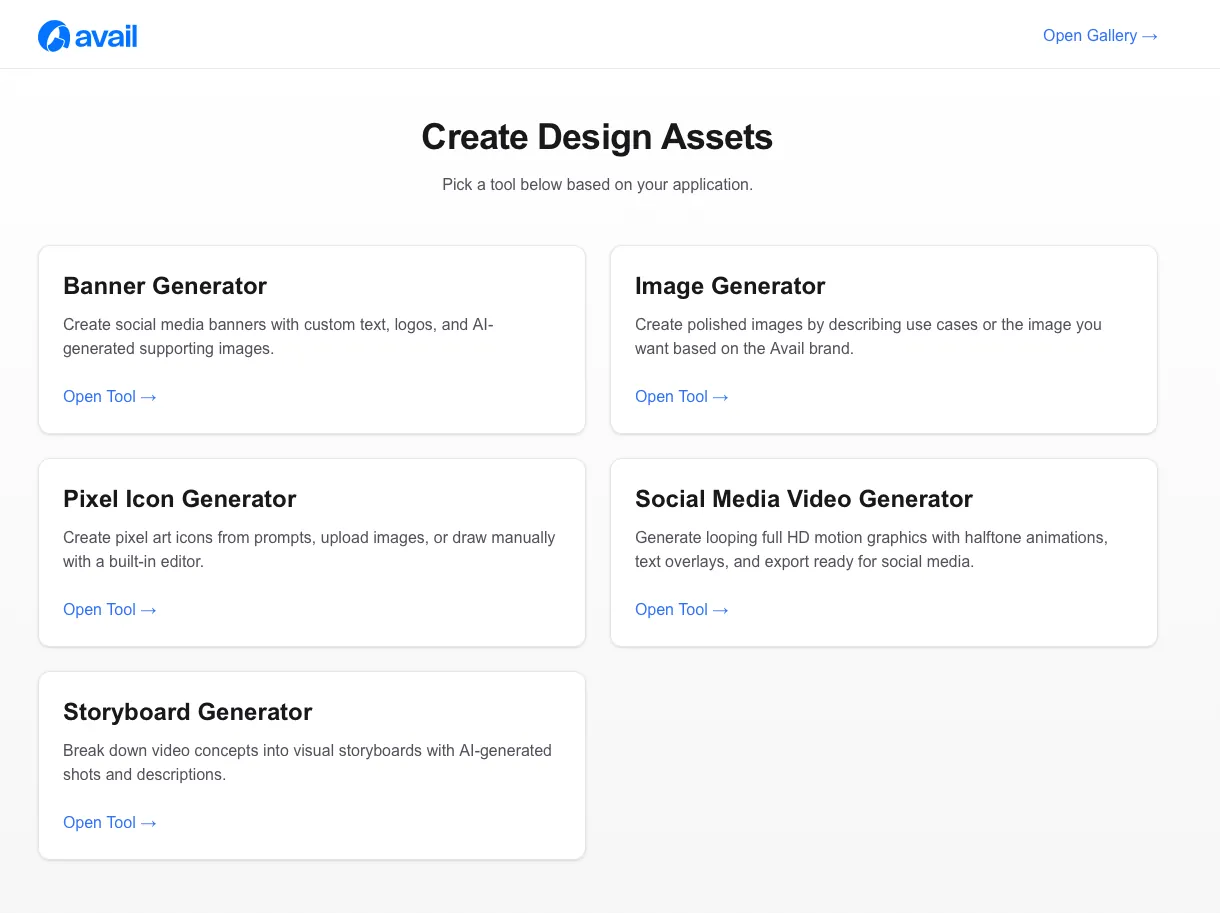
An AI-powered design generation pipeline that produces on-brand assets at scale. Built to maintain visual consistency across marketing materials, social posts, and product interfaces.
What it is. An internal tool that turns design decisions into a system anyone on the team can operate. Brand rules — colour, type, layout, voice — are encoded once, and the tool generates assets that follow them: social posts, banners, announcement graphics. The output looks like it came from the design team, because the design team’s judgement is baked into the generator.
The problem it solves. Ecosystem marketing produces a relentless volume of assets: campaign graphics, community updates, event announcements, localized variants. A design team can set the standard but can’t personally produce every derivative. The usual failure mode is drift — each derivative gets a little less on-brand until the ecosystem looks like five different companies. This tool makes consistency the default instead of a review step.
Who it’s for. Marketing and community teams who need assets now, and designers who want to spend their time on new work rather than resizing last week’s graphic. Non-designers get guardrails; designers get leverage.
How it’s built. A generation pipeline that combines templated layout logic with AI image generation for visual content, all constrained by the brand system. Parameters — format, campaign, message — go in; a finished, on-brand asset comes out. Where generation alone would drift, templates hold the line.
A concrete use case. A campaign launches in three regions with three headline variants. Instead of a day of manual production, the community lead generates the full set — same layout, same brand, correct copy — in minutes, and the designer reviews rather than rebuilds.
What it demonstrates. The useful version of AI in design isn’t generating random images — it’s encoding taste so it can be reproduced. That’s the bet this tool was built to test, and it held.
