
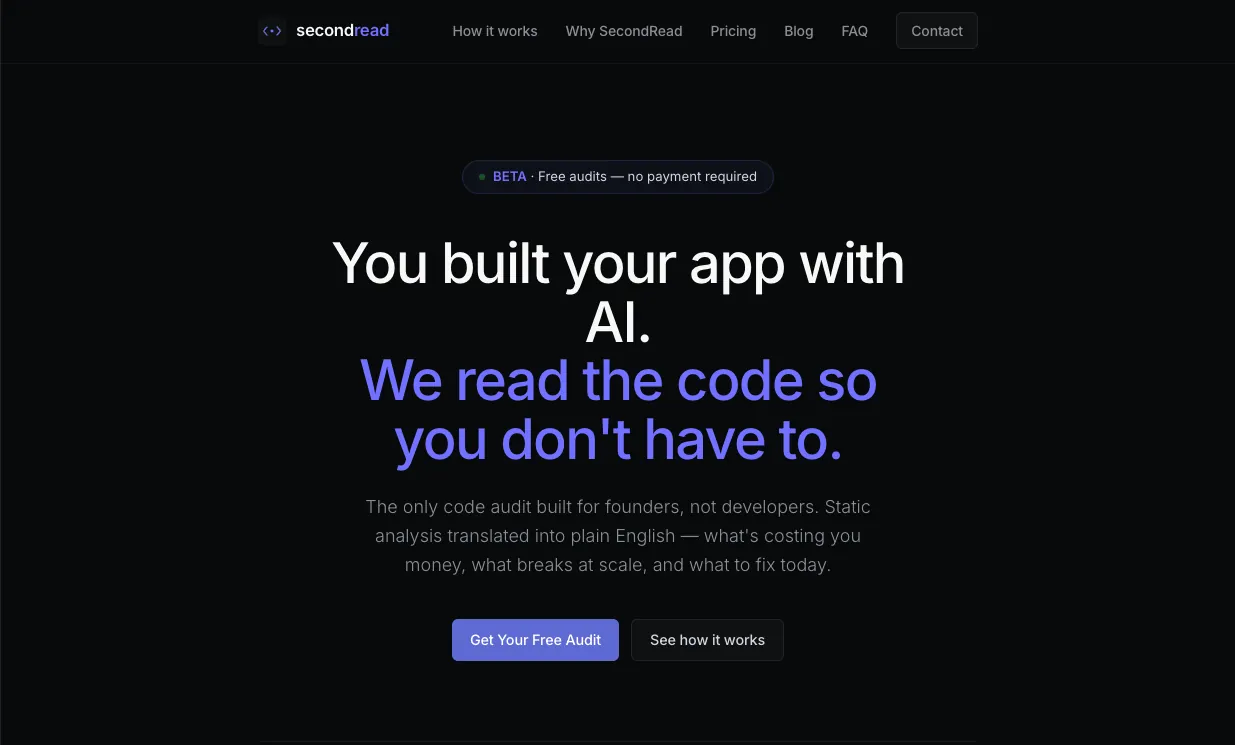
SecondRead translates complex codebases into plain-English reports that non-technical founders can actually understand. Built with AI-powered semantic analysis and a clean, readable interface.
What it is. A code audit pipeline that reads a software project and produces a report a non-programmer can act on. It maps the architecture, flags risky or duplicated code, and explains findings in ordinary sentences — no jargon walls, no “refactor the monolith” hand-waving. The output reads like a consultant’s memo, not a compiler log.
The problem it solves. Founders without a technical background hire developers or agencies and then have no way to judge the work. Is the codebase healthy? Is the quote for that new feature reasonable given what’s there? What happens if the lead developer disappears tomorrow? Traditional audits answer these questions in language that assumes you already know how to program. SecondRead assumes you don’t.
Who it’s for. Non-technical founders, product managers who’ve inherited a codebase, investors doing diligence on a software asset, and agencies that want an independent second opinion before taking a project over.
How it works. The pipeline combines semantic code analysis — understanding what functions and modules actually do, not just how many lines they run — with structured reporting. A full audit maps the project’s architecture into a knowledge graph, traces risk across dependencies, and turns all of it into a prioritised list of findings with plain-English explanations.
A concrete use case. A founder preparing to raise funding runs a SecondRead audit over their product’s code. The report shows which parts of the system are solid, which are held together with tape, and what it would cost to fix the weak spots — facts they can put in front of investors instead of assurances.
Status. SecondRead ran as a live service and was shut down in August 2026 after a strategy review; the audit pipeline and its findings live on as internal tooling. The case study remains a good demonstration of the approach: making code legible to the people who pay for it.
Visit the SecondRead site for the archived product page.
